Wednesday, September 6, 2017

Forbidden Fruit by Stanley Gazemba


A fragrant cup of Kenyan tea.


   I picked this book from Netgalley, hoping to catch a glimpse of the life and culture of rural Africa and that is what I got. The book is a tale of primal human emotions, it's a tale of love, lust, friendship and betrayal.

  Life is hard in the village but Ombima has a family to feed. He cannot watch his children go hungry especially when his master's garden is laden with fruits that is ripe for the picking. So, in the cover of darkness, Ombima steals some cassava and bananas, hardly aware that the lady of the house, Madam Tabitha is watching him. He ought to feel guilty but he did toil in these gardens when working for his master, so why not help himself to some? A turn of events and Ombima has his eyes set on the juiciest fruit in his master's estate. But this forbidden fruit comes at a price.

  There is an aura of mystery about Madam Tabitha. She should have had Ombima whipped for stealing from her garden, instead she assigns him the duty of finding the thief. Why?

  Drama-wise this book isn't racy or overwhelming but I did feel that the narrative was relatively appealing. A casual flow of words through the story of life in a Kenyan village. A fine peppering of local dialect ( Swahili probably) in the narrative was a nice touch but a glossary of these words would have been helpful. Or maybe the glossary was missing from the copy I had downloaded from Netgalley.


Excerpt from the book :

    "Good day to you, Ombima," she called out. "How was work today?" 

   There was a brightness around her that made Ombima quite at ease. "Fine, Madam," he said equally cheerfully. The sheen to her rounded cheeks, this close, was almost girlish. Standing there in front of her in his sweat stained work clothes, Ombima felt suddenly self- conscious. He waited for her to ask about the assignment she had given him, but it seemed she too was waiting for him to speak. And so he said, "I've been observing everyone, Madam, and I must say that I am quite baffled." he saw her eyebrow rise, as if to say, "How so?" And so he cleared his throat and carried on, "Indeed I must say that if there is a thief among us,then whoever it is must be very clever. That is because everyone is acting normal to me....no one is giving anything suspicious away."


About the author Stanley Gazemba:

  Born in Kenya,Stanley Gazemba is the winner of the Jomo Kenyatta Prize (2003) for fiction for his novel The Stone Hills of Maragoli which was published by The Mantle as Forbidden Fruit. Besides his two other novels ( Khama and Callused Hands) he has published eight children's book, of which A Scare in the Village has won the 2015 Jomo Kenyatta Prize for children's fiction.

 A journalist by training, he has written for The New York Times, The East African, Msanii magazine, Sunday Nation and Saturday Nation. 


Saturday, August 13, 2016

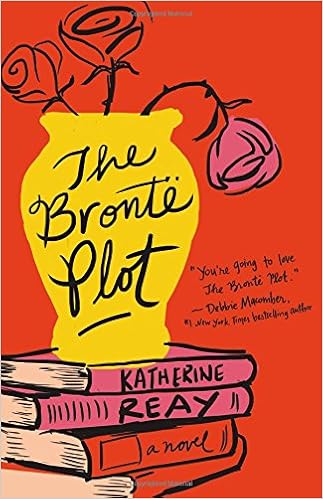
The Bronte Plot by Katherine Reay


A Travelogue with a Tale


    Here is a scenario that all bibliophiles would agree with. We fall so deeply in love with our book(s), that we don't just read and re- read it, we live it. Our conversations are peppered with passages from the book. We may even emote like a character did in the book,.. well..  like how we imagined the character did, in our heads.

   " I mean that reading forms your opinion, your worldviews, especially childhood reading and anything that does that has an impact"  - Katherine Reay, The Bronte Plot


    This is what unfolds in Katherine Reay's novel, The Bronte Plot. Her protagonist lives and breathes books of the Victorian era, Jane Austen, the Bronte sisters, Charles Dickens, Beatrix Potter, John Ruskin etc..

   Lucy Alling has a gift. She, like her father, can weave fabulous stories that will enthrall an audience. This gift helps flourish her profession as a seller of rare editions of books. It was all  perfect until her secret is discovered and everything turns sour for Lucy. She is on the verge of ruining her relationship with Sid, her mentor / father figure and with her boyfriend James. In walks Helen, James' grandmother, with a proposal for a quest that is quite alluring and may provide a solution to untangle the mess in Lucy's life.

   The novel is mostly about the physical and the emotional journey that Helen and Lucy set upon, which takes them to London and Haworth. This is what I really liked about the book. There are plenty of references about places worth visiting in England, if one is a fan of classic English Literature. This is why I call the novel " a travelogue with a tale'. I have highlighted all the tourist spots mentioned in the novel, lest I miss any when planning my trip to London.


  " Lucy led on, through Russell Square, and upon reaching Gordon Square, she stopped. "Here it is. The heart of the Bloomsbury Group. You wouldn't believe who lived along here" 


   A simple tale but the references to various literary passages and quotes from books of the Victorian era were a delight to read and so was the tour of London. Read it if you are a literary buff and travel enthusiast.


Friday, August 12, 2016

Cookie Jar by Stephen King


A well baked Stephen King recipe


Image result for cookie jar by stephen king


   A magical cookie jar that is always full of freshly baked cookies and magically fills up no matter how many cookies one takes out to eat. Crispy, crumbly and an array of choices to pick from. This could be what every child dreams are made of.

    For Rhett and Jack Alderson this was a dream come true. Their mother has one such jar, a blue ceramic cookie jar, from which she treats her boys with sumptuous cookies to eat and memories of happy hours to keep. After his mom passes away, Rhett inherits the cookies jar. The brothers then discover the magical secret of the cookie jar but they continue to eat from it. One day Rhett upends the cookie jar, to literally unravel the mystery at the bottom of the Jar. What he finds is beyond bizarre.

    Stephen King's Cookie Jar is perfect for a quick read. Being just twenty odd pages long, the narrative is the retelling of a tale by an older Rhett Alderson to his great grand son. The tale is set against the backdrop of major wars that rocked the twentieth century, especially WWII.

   The Author treads a fine line between fact and fantasy. The Cookie Jar is perhaps an allegory that Stephen King uses lest the memory of the brutality meted out at the Nazi concentration camps fades with time.  Having read the short story, what remains undecidable is "what is more horrific?". The acts of barbarity in the western kingdom of Lalanka or the depths of human depravity in our world. Either way, the point to remember is that how we choose to write our history is up to us.

   The story appeared in the Spring 2016 issue of the VQR Magazine ( a delight to all readers, me included..YAY  ) and I now hear that it has also been included in the October 2016 paperback edition of Stephen King's book, Bazaar of Bad Dreams.


Saturday, July 9, 2016

Someone Like You by Roald Dahl


A Golden Ticket to the Land of Terror.....


     I recently read The Storied Life of A.J. Fikry by Gabrielle Zevin, and there among the many mentions of other literary works, was one about a short story that I had read in high school and I remember my entire class feeling fascinated at the end of reading it. The story was "Lamb to the Slaughter" by Roald Dahl.

    Roald Dahl was a stranger to me back when I was in high school. This was just before the internet took over and when Enid Blyton and Carolyn Keene's Nancy Drew were our staple reading material. Imagine the surprise when I realised that " one of the greatest storytellers for children" also wrote for adults!! So thanks to Ms. Zevin, I picked this book up to read.

    Someone like You is a collection of 18 short stories. Some of these stories like Taste, Dip in the Pool, My Lady Love, My Dove have originally appeared in The New Yorker. A few of these classics have been adapted into movies or television series ( the infamous Alfred Hitchcock Presents series) so even if you know how the story ends do read them to appreciate  Roald Dahl's writing and his magic magic.

  Let's take sneak peek into a couple of stories from the collection.

   Lamb to the Slaughter and Man from the South are fairly well known so skipping those...

  In Dip in the Pool, William Botibol a passenger on board a British cruise ship bids  200 GBP on a betting pool where passengers try to guess the number of miles the ship would travel on a given day. Botibol bets on a "low field" hoping the bad weather would slow the ship down. He wakes up to find a bright, sunny weather and the ship having made up its course. Botibol immediately sets about staging "an accident" but destiny has a mind of it's own.

  Hell hath no fury like a woman scorned in Nunc Dimitiss,when Lionel Lampson designs an elaborate revenge on his younger girlfriend Janet de Palagia.

   A wine connoisseur's skills are put to the test at a dinner party in Taste. Richard Pratt  stands to win two houses from Mike Shofield, the host if he can guess what wine is being served at the table. The stakes are doubled when Pratt seeks Mike's daughter, Louise's hand in marriage.

   Besides Lamb to the Slaughter and Man from the South I enjoyed reading Nunc Dimittis and Mr. Feasey. Tales of terror, tales of macabre, watch out for the twist in the end of each tale.


Wednesday, July 6, 2016

Tuesdays with Morrie by Mitch Albom


"Once you learn how to die, you learn how to live." 
                                                             - Morrie Schwartz


    There is an element of danger in reading books written about people who are dying. Hence, when this book was recommended and I had bought the book ( on an impulse mind you, the book cover is quite plain, unappealing actually), it just sat on my bookshelf in its pristine condition. The right moment to read the book finally presented itself when I had to take a quick weekend trip. A spiritual trip, so I was in the  right temperament too.

   The best thing about this book for me is that, though it is about a dying man, Tuesdays with Morrie was not depressing to read. I did not find any ground shattering revelations about dying nor did I tear up while reading.  The "life lessons" were about living than about accepting death or regrets in life . This I like. And introspectively, Morrie Schwartz wouldn't have wanted either, he did say that death was inevitable but life goes on. The narrative style is fairly simple, Mitch Albom does not depend on dramatic effects to stir one up, he allows Morrie's aphorisms to do that.

    Now I am not ready to look for any bird on my shoulder and ask it " Is today the day I die?". And in retrospect, having read the book, most of the aphorisms, I believe are quite common or known to most of us. We have heard ( or read) it said by " any wise man". But what puts this book on a pedestal is how Morrie strings together these revelations as something easy to imbibe.


" Devote yourself to loving others, devote yourself to your community around you, and devote yourself to create something that gives you purpose and meaning."

   Isn't this simple? Simple but forgotten in our rat race, in our daily grind. We have gone astray. and this is when we need a teacher, a guiding light, people like Morrie Schwartz who can light up the path. Morrie Schwartz was truly " A Teacher to the Last" Spend some time and read the book, if you haven't already, it will be worth every moment.

Tuesday, April 19, 2016

The Flea Palace by Elif Shafak ( translated from Turkish by Muge Gocek)


A Turkish Delight 


   Istanbul has been on my travel itinerary for a very long time. I dream of visiting the Blue mosque, shopping at the Grand Bazaar, sunset cruise on the Bosphorus... Oh the joy! So until then I shall explore the Turkey in the fictional world. 

   The Flea Palace is about BonBon Palace, a decrepit building in Istanbul, whose residents are troubled by the piling garbage near their wall and the bugs infesting the homes. Through the voice of the narrator, Elif Shafak explores the various facets of the building's occupants. Ten flats and ten different stories, it was like peeking through a window and watching scenes unfold in each apartment.

  Here is a sneak peek into some of these flats.

Flat No.1: Musa, his wife Meryem and son Muhammet. Meryem is concerned about her son getting bullied at school and hopes that he would find the courage to defend himself.

Flat No.3: The hairdressers Cemal and Celal,  As for them ,there is never a dull moment in their shop.

Flat No.5: Hadj Hadj who spends his time telling stories to his grandchildren and having his daughter-in-law worried about how these stories would influence these children.

Flat No.7: The narrator, "Me", a recently divorced university professor.

Flat No.9: Hygiene Tyijen and her daughter Su .  Hygiene Tyijen  is a cleanliness freak who is obsessed with getting rid of every bug,  miniscule or large.

Flat No.10: Madame Auntie, a matriarch with a mysterious past. 

   
   At a certain point while reading the book, these varied tales didn't seem to have any consonance. But eventually, like scraps of fabric that are stitched together to form a beautiful quilt, these tales fell into place perfectly.

  I had started reading this book anticipating Whirling Dervishes and Belly Dancers but there is a lot more to Turkey that will enchant us and this book is a microcosm of that.

  On a final note, I salute all translators whose work transcend the boundaries of language and have made such gems written in native languages available to those foreign. Thank you Muge Gocek for the English translation of this book.


Thursday, April 14, 2016

The Museum of Extraordinary Things by Alice Hoffman


A box full of sepia tinted photographs


    If you are a romantic like me, then coming upon a box of old photographs in a rusty trunk or a tattered suitcase, would be like finding a ticket to ride the "time travel machine". You are instantly transported into a sepia tinted world as you use your vivid imagination and weave tales trying to piece together the lives of those who stare back at you, from those photos. This is how I felt while reading this book.

    Set in New York's Coney Island in the early part of the twentieth century, The Museum of Extraordinary Things is a fairy tale of sorts. There is estranged love, strange magical creatures ( well magical in their own way), a monster of a villain and a grand finale with lots of fireworks. 

   Coralie Sardie is one of the attractions at her father's show, the Museum which exhibits the quirks of nature, the "freak show".  Eddie Cohan in a Russian immigrant, a magician of his own kind... a photographer who like a magician freezes the scene unfolding through the eye of the camera, for all eternity to gasp in awe. Chance brings Coralie and Eddie together but love does not always conquer all...

    I have heard that Alice Hoffman's The Dovekeeper is the best of her work, I hope to read it some day and figure that out myself ( and I shall post my review here in my blog ). Coming back to the book, I like how the author has strung real life events into the story line, giving the novel a sense of credulity. And the narrative is very surreal, reading this book was like a leaf wafting in a gentle breeze.

  If you are a fan of historical fiction, then  you may have already read this book or put it on your reading list. To all others, I recommend this book.


Passages from the Book :


“Eddie had come to understand that what a man saw and what actually existed in the natural world often were contradictory. The human eye was not capable of true sight, for it was constrained by its own humanness, clouded by regret, and opinion, and faith. Whatever was witnessed in the real world was unknowable in real time. It was the eye of the camera that captured the world as it truly was.”


“When darkness fell, he told me to close my eyes and dream, for in my dreams I would find another world, and in my waking life I would soon enough find such a world as well...” 


 “I knew that men told you the truth for one of two reasons: when they wished to be rid of what they couldn’t bear to carry, or when they wished to include you in what they knew so their stories wouldn’t be lost.”